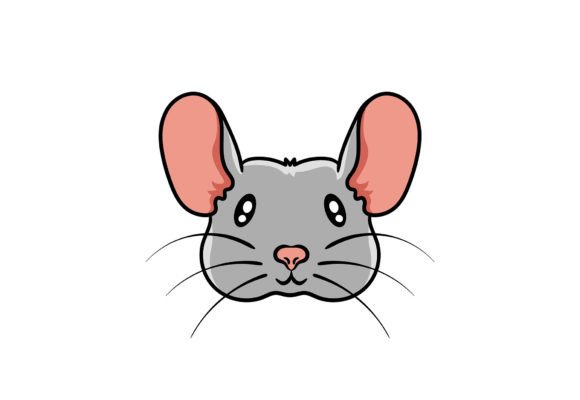
Mouse Illustration Art Review
As a designer and embroidery product reviewer, I often find myself evaluating digital designs for real-world use. The Mouse Illustration Art caught my attention because of its simple yet charming aesthetic. It’s a design that feels like it could fit into a variety of projects, from custom apparel to handmade gifts. But how does it hold up in actual embroidery work? Let’s break it down.
First Impressions: A Delightful Design with Potential
The Mouse Illustration Art has a soft, whimsical feel. The shape is clean, the layout is balanced, and the overall theme is friendly and approachable. It’s not overly detailed, which makes it versatile but also raises questions about its suitability for certain applications. The illustration appears to be a vector graphic, which is great for scaling without loss of quality. However, the level of detail isn’t high enough for intricate stitch work, so it may not be ideal for projects requiring fine lines or complex textures.
This design would likely appeal to customers looking for something cute and nostalgic. It’s perfect for baby items, children’s clothing, or holiday-themed products. But I’d want to test it on different fabrics before committing to a large order.
Real-World Embroidery Use Cases
When considering where to place the Mouse Illustration Art, I think about practicality. For example, if I were creating a custom embroidered tote bag for a small shop, this design could work well as a central motif. Its simplicity means it won’t overwhelm the fabric, and it can be easily adapted to different sizes. However, if I were using it on a sweatshirt with a lot of other text or graphics, it might get lost.
For baby items, like onesies or blankets, the design could add a playful touch. But I’d need to make sure the stitching is clear and the thread colors contrast well with the fabric. If the design is too faint, it might not stand out on light-colored materials.
On caps or hats, the Mouse Illustration Art might be challenging. Curved surfaces can distort the design, especially if the hoop size is too small. I’d recommend testing it on a mockup before finalizing any orders.
Where to Be Cautious
There are a few areas where the Mouse Illustration Art might not perform as well. On thin or stretchy fabrics, the design could pucker or lose definition. It’s important to use the right stabilizer to prevent this. Also, on dark fabrics, the design might not show up as clearly unless you choose a contrasting thread color.
If the design is used on layered garments or textured fabrics, the details could become muddled. The same goes for products that require frequent washing—stitch density and thread choice will play a big role in how well the design holds up over time.
For commercial embroidery projects, I’d want to confirm the licensing terms before selling anything. If the design is intended for personal use only, it could limit the scope of what I can create.
Impact on Visual Appeal and Customer Perception
The Mouse Illustration Art has a strong visual identity that could enhance the appeal of handmade products. When stitched correctly, it adds a unique touch that can set a product apart from generic options. Customers often look for something that feels personal and thoughtful, and this design has that potential.
However, if the embroidery is poorly executed, the design could appear cheap or unprofessional. That’s why testing is crucial. I always recommend doing a trial run on scrap fabric to see how the stitches look before moving forward.
For Etsy sellers or craft business owners, the design could be a valuable addition to their inventory. It’s easy to customize and can be used across multiple product types. But again, the success depends on how well it’s executed and how it fits into the brand’s overall aesthetic.
Embroidery Designer Notes
Before using the Mouse Illustration Art in any project, I’d start by testing it on different fabrics. This helps determine how the design looks in various conditions. I’d also check the stitch density to make sure it’s appropriate for the intended use. Too much density could cause the fabric to pucker, while too little might result in a weak appearance.
It’s also important to review the file format and ensure it’s compatible with your embroidery machine. If the design is meant for applique or satin stitch, I’d want to confirm that the file includes all necessary layers and stitches.
For digital product sellers, the Mouse Illustration Art could be used in printable mockups or as part of a downloadable design pack. But again, licensing is key. Make sure you have the rights to sell or distribute the design as needed.
In summary, the Mouse Illustration Art is a versatile design that could work well in a range of embroidery projects. With the right preparation and execution, it has the potential to enhance both the aesthetic and value of handmade products.